Are (passive) solar parks a thing of the past?
The rapid growth of solar parks is a positive step for climate goals and energy security, but it has also concentrated electricity generation into sunny hours, leading to frequent periods of oversupp
SOLAR ENERGY HAS GROWN RAPIDLY — AND FOR GOOD REASON
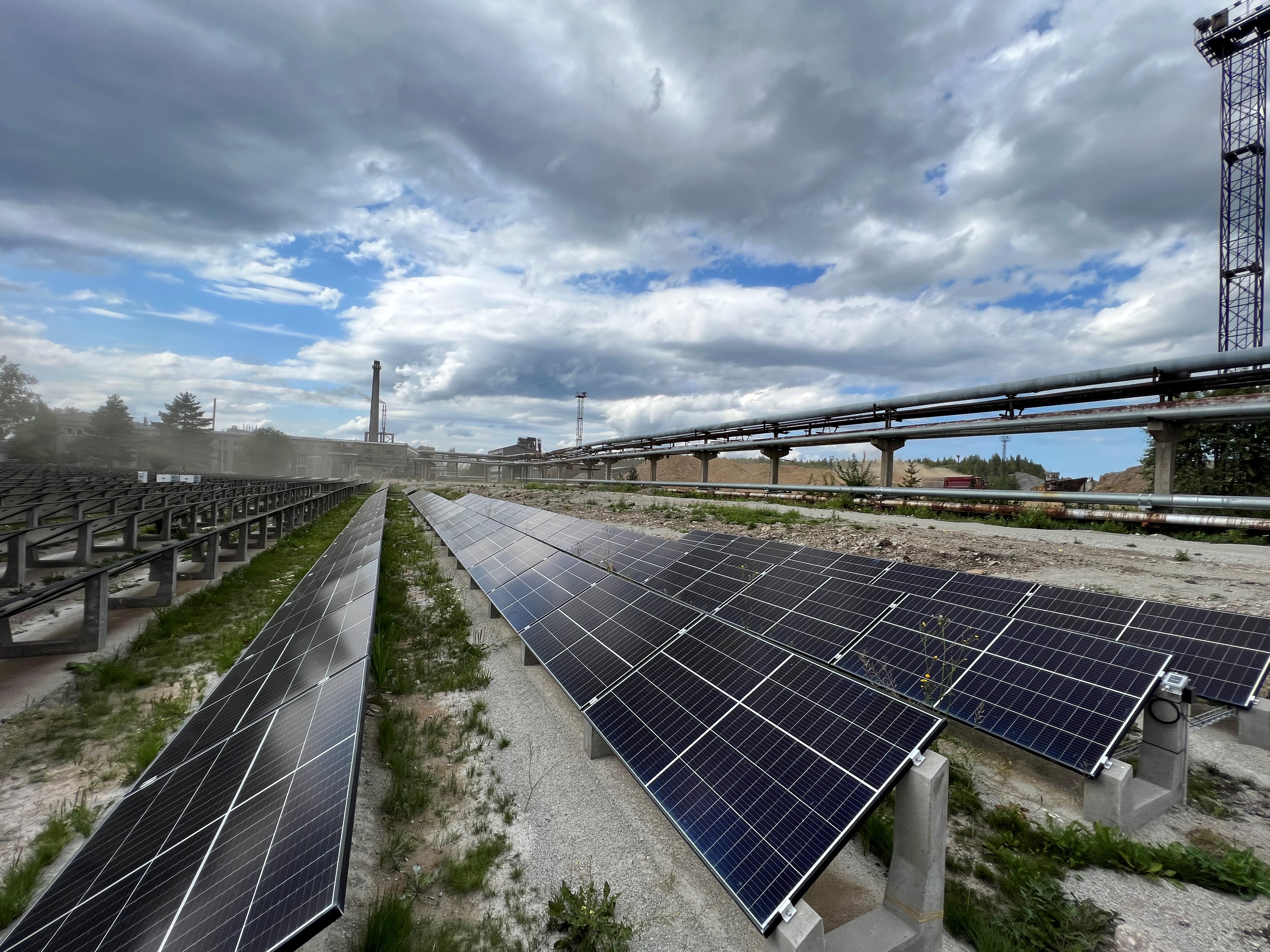
Solar power generation capacity (PV) in Estonia has grown rapidly since 2020, and by the end of 2024 approximately 1.2 gigawatts of total capacity had been connected to the grid. In addition to large-scale development projects built for electricity market production, PV plants have also become widespread across industrial sites, agricultural operations, and commercial real estate.
Building PV plants has enabled companies to use free solar energy for self-consumption, reduce electricity purchasing costs, and lower grid fees. Their relatively simple implementation has helped improve companies’ financial performance while supporting climate goals.
The rapid growth of solar energy is further supported by several major projects currently under construction or in the design phase. One of the largest is the Risti solar power plant, where 244 MW of solar panels will be installed. RMEnergy has been closely involved in the development of both the Risti solar plant and several other large-scale projects.
“Over the past few years, companies’ interest in solar energy has increased significantly. Investments are increasingly viewed not only as environmental solutions, but also as opportunities to improve energy independence and reduce long-term costs,” says Mihhail Mitrofanov, Development Manager at RMEnergy. According to him, solar electricity production from spring to autumn can cover a large share of Estonia’s electricity demand. For comparison, Estonia’s peak electricity load in 2025 was recorded at 1,466 MW.
This rapid growth is, on the one hand, a positive step toward achieving climate goals and strengthening the region’s energy autonomy and security. On the other hand, the way and timing of electricity production have changed, meaning that during sunny weather the grid is increasingly overloaded with electricity. These situations have had a major impact on passive solar parks. In this context, a passive solar park refers to a PV plant without storage or smart timing energy control capabilities.
PROBLEMS IN THE SOLAR PARADISE
During summer months and daytime hours, electricity supply increasingly exceeds demand. In Estonia and across the Baltics, solar parks often generate electricity simultaneously, while cross-border connections are not always capable of absorbing the excess electricity. The result is persistently low electricity prices precisely during the hours when solar production is at its highest.
This has led to situations where some producers have had to temporarily reduce or even stop production because the system lacks the capacity to absorb additional electricity. Just a few years ago, negative or extremely low daytime electricity prices were considered exceptional, but they have now become a fairly common summer market condition.
By 2025, this was no longer a rare occurrence. Solar parks whose business model relies on immediately selling generated electricity to the grid are particularly vulnerable. For these parks, selling electricity during the summer may generate very little revenue or even create losses that exceed sales margins and balancing management costs.
This situation has also affected companies that installed solar panel systems primarily for self-consumption. Although onsite solar generation reduces the amount of electricity purchased from the grid, the economic benefit is often smaller than expected because peak solar production overlaps with periods when electricity prices are low.
This is not a temporary market imbalance, but rather a natural and structural consequence of solar energy’s success, the market is simply following production and demand patterns.
HOW TO REGAIN CONTROL
For PV park owners, the current market situation may feel disappointing because their original business plans no longer perform as expected. As a result, it is easy to conclude that solar parks are no longer profitable investments. In reality, they remain valuable, but the business model has changed.
Electricity has value above all when it can be used, stored, or directed to the market at the right time. The solution lies in energy’s ability to respond to market needs. Solar parks without management capabilities simply have to accept market outcomes, while flexible systems can take advantage of market signals and may even achieve higher yields than originally forecast.
Such management capabilities can take several forms: demand shifting, production curtailment, or energy storage. Each requires additional equipment with intelligent energy management programming.
This determines whether solar energy can effectively respond to market and system conditions. “The successful solar projects of the future will no longer compete solely on production volume, but primarily on their ability to respond to market price signals and grid needs,” says Mitrofanov.
In practice, battery storage is often the most direct, and in some cases the only, way to provide the flexibility required for solar energy projects. As a result, storage is increasingly being considered alongside new PV investments. However, certain energy management capabilities can also be achieved without energy storage but only with additional management systems when electricity generated by the solar park is also consumed onsite. These systems decide when energy is sold to the grid and when it is directed toward consumption, improving the overall return on investment.
PRACTICAL MECHANISMS FOR CREATING VALUE
Price arbitrage is one of the most common examples of value creation in energy markets enabled by battery energy storage. Instead of immediately selling electricity at the time of production (often at low prices) energy can be stored and sold later when demand and prices are higher. This reduces the impact of low midday prices and increases the average value of sold solar energy.
Another category of value comes from participating in frequency control and other balancing service markets. These markets pay assets that can respond quickly and reliably to system needs. Prices are based not only on energy capacity, but also on readiness and responsiveness.
For example, when grid frequency becomes too low or too high, these systems can help restore balance across the entire grid. Participation in such electricity markets requires rapid management capabilities, which passive solar generation often cannot provide.
Even without battery storage, PV parks may offer limited participation in down-regulation markets by reducing production when required by the market or system conditions. This allows producers to participate in balancing mechanisms instead of simply being forced to shut down production. It also enables them to earn additional revenue from flexibility and avoid generating electricity when market prices are negative or lower than associated selling costs.
“Already today, the market clearly shows a trend where new solar projects are designed together with storage and control solutions, because simply adding generation capacity no longer guarantees the desired returns,” explains Mitrofanov.
All of these opportunities require a management system integrated with an aggregator and/or Virtual Power Plant (VPP) service. These systems use algorithms and forecasting models to make control decisions and send relevant signals to solar power plants, such as limiting production or managing storage capacity. Such control can also be added to existing projects, which without it effectively remain passive and exposed to market risks even if the asset itself is technically flexible.
WHERE IS THE MARKET HEADING?
The development of solar energy has not stopped, it is simply moving into a new phase. Electricity demand continues to grow as more sectors of the economy become electrified. Industrial processes, transportation, heating, and data infrastructure are increasingly dependent on electricity, which means long-term system-wide electricity demand will continue to rise.
PV has been and will remain a strong and relevant investment, but no longer as a passive producer. Its value increasingly depends on whether the system is designed as a flexible energy solution that responds to market signals, grid constraints, and electricity demand timing. “The future of solar energy no longer depends only on how much electricity is produced, but on how intelligently and flexibly that energy can be used and directed to the market,” says Mitrofanov.
The era of solar energy is not ending, but the era of PASSIVE solar parks is. Solar energy is not disappearing, but its value increasingly depends on storage, active management, and the ability to respond to market conditions. The PV projects of the future will no longer be simple production units, but active parts of a smart energy system.