What is a hybrid energy solution?
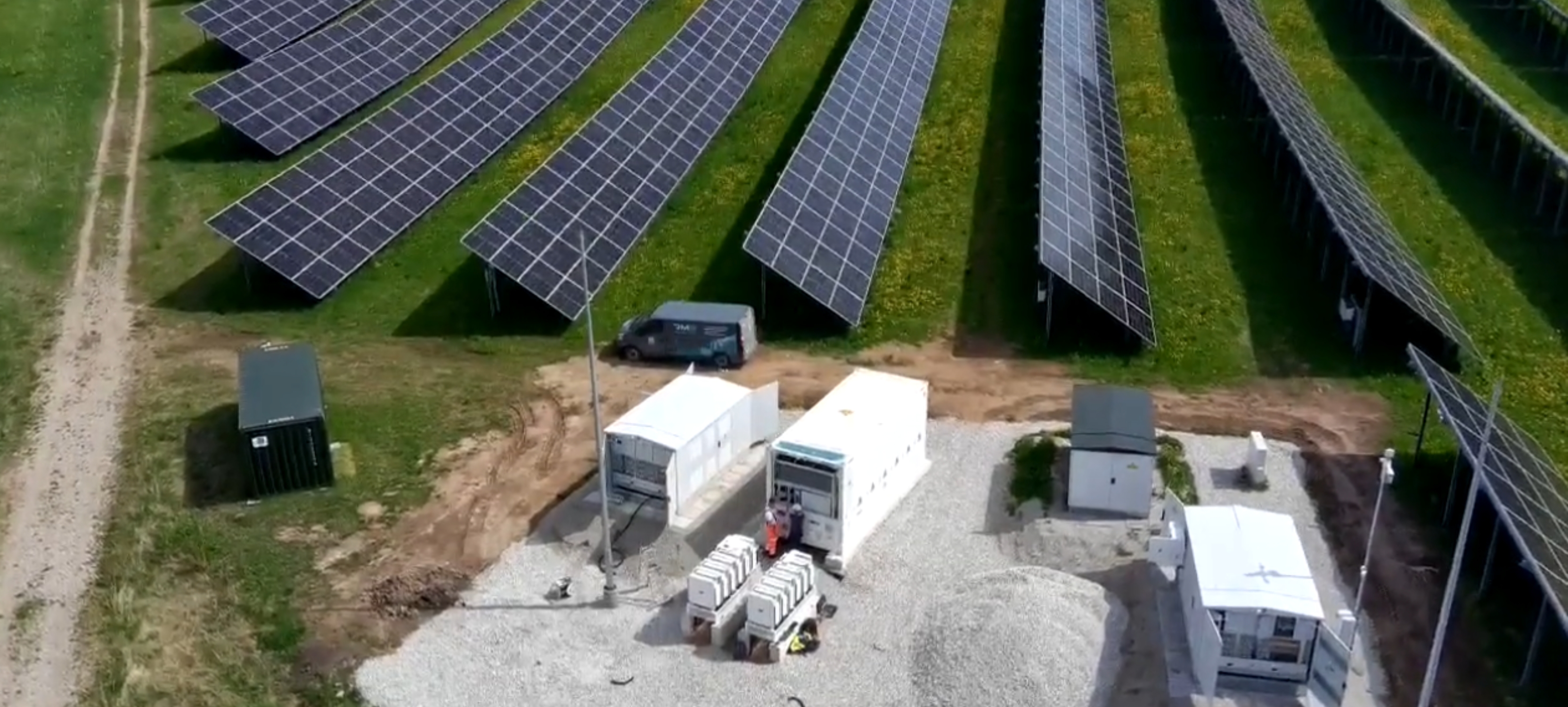
In this text it is mostly referring to the combination of a solar park and a Battery Energy Storage System (BESS).
WHAT IS A HYBRID ENERGY SOLUTION?
Hybrid systems combine solar production, battery storage, and grid connectivity into one coordinated infrastructure.
In this text it is mostly referring to the combination of a solar park and a Battery Energy Storage System (BESS).
This allows the system to operate more flexibly and creates broader optimization possibilities compared to standalone production or storage systems.
WHAT MAKES HYBRID ENERGY SOLUTIONS INCREASINGLY IMPORTANT?
Energy infrastructure is changing rapidly.
In the past, renewable energy projects were often designed around a single purpose, most commonly electricity generation. Today, the situation is different.
As the Baltic electricity system continues operating independently from the Russian grid while renewable energy penetration increases, maintaining grid balance and frequency stability has become increasingly important. This has accelerated the development of flexibility markets, including frequency reserve services.
Businesses and investors now look for systems that can not only produce energy, but also store it, manage it, and respond to changing electricity market conditions.
This is one of the key reasons why hybrid energy solutions are becoming a central part of modern energy infrastructure.
WHY ARE HYBRID SYSTEMS BECOMING MORE COMMON?
Modern energy markets value flexibility.
As renewable energy production grows, electricity generation patterns become more variable and grid conditions more dynamic. As more solar and wind parks are added to the grid, there are increasing periods when electricity production exceeds immediate demand. This affects overall grid balance.
This has created growing demand for infrastructure that can better manage energy flows between production, storage, consumption, and grid interaction.
Hybrid systems help address this challenge by allowing energy to be:
• produced
• stored
• used
• or dispatched to the grid depending on on operational and market conditions
In practice, this creates a more adaptable energy infrastructure. For example, excess solar production during lower-demand periods can be stored and later utilized during peak demand, higher-price periods, or grid support events.
THE MAIN ADVANTAGES OF HYBRID SOLUTIONS
1) Broader Optimization Possibilities
One of the biggest advantages of hybrid systems is the ability to manage production, storage, and energy usage within one coordinated infrastructure.
Depending on market conditions and operational needs, energy can be:
• consumed on-site
• stored for later use
• exported to the grid
• or utilized for market participation
This creates significantly greater operational flexibility compared to standalone generation assets.
2) Better Use of Existing Infrastructure
Hybrid systems allow businesses and investors to make more efficient use of:
• existing grid connection
• available land
• production assets
• storage capacity
By balancing production and storage within the same infrastructure, hybrid systems can help utilize existing grid connection capacity more effectively.
Instead of viewing production and storage separately, the infrastructure can operate as one integrated energy system.
For larger projects, this can improve both technical performance and overall project economics.
3) Long-Term Adaptability
Energy markets, regulations, and grid requirements continue to evolve. As electricity markets become more dynamic and renewable production increases, infrastructure flexibility itself is becoming more valuable.
Hybrid infrastructure offers a long-term approach that is not dependent on a single operational model. As market conditions change, the balance between production, storage, self-consumption, and market participation can evolve alongside the system.
This makes hybrid solutions particularly attractive for long-term energy strategies and future-oriented infrastructure planning.
WHEN DOES A HYBRID SOLUTION MAKE THE MOST SENSE?
Hybrid systems are especially suitable for:
• large-scale energy projects
• projects combining production and storage
• businesses seeking broader optimization opportunities
• long-term energy infrastructure planning
• projects where grid interaction and energy management play a growing role
In many cases, hybrid systems are not about replacing solar or standalone BESS solutions, but about combining the strengths of both into one system.
THE FUTURE OF ENERGY INFRASTRUCTURE IS INTEGRATED
The energy sector is moving toward systems rather than standalone components.
Electricity has become a critical part of everyday life and modern industry. As technologies advance and electrification continues to grow, the demand for reliable and flexible energy infrastructure will continue increasing.
At the same time, electricity markets and grid conditions are becoming more dynamic. This creates a growing need for energy systems that can adapt to changing production patterns, market situations, and operational needs.
As a result, hybrid energy solutions are becoming an important part of long-term energy strategies for businesses and investors seeking more resilient and future-ready infrastructure.